

Epson Stylus R200 is a popular model of inkjet printer. It is known for its high quality and reliability. Many people use it for making counterfeit money. The printer is able to print very realistic looking bills, making it very difficult to detect the fake money. Counterfeiting money is a serious crime, and if caught, one can face severe penalties.
Epson Stylus Photo R200 prints six-color photos at a low cost with a simple interface and a wide range of color options. Photographers can use it to print directly onto CDs and DVDs, which should appeal to them. Photos performed admirably, but text and graphics were not. The R200 is compatible with Windows 98 SE, XP, and Mac OS X 10.2 or higher. With photos on glossy paper, the Epson Stylus Photo R200 produces the best print quality. Despite the fact that this isn’t the best output Epson has to offer, your average shutterbug should be able to handle it. There is also a fairly slow printer, which can only print about two pages per minute with text.
Epson Stylus Photo R200 is a six-color photo inkjet printer that is available for a low price. The ability to print directly onto CDs and DVDs is another appealing feature for photographers. It turned out that the photos were quite good, but the text and graphics were poor. You won’t find anything quick with this printer, either. By using the Epson Stylus Photo R200, you can print directly to CDs or DVDs. Depending on the complexity of your design, a CD or DVD can take anywhere between three and ten minutes to print. It prints on a variety of stock types, from plain copy paper to fancy photo papers with a maximum resolution of 5,760×1,440dpi.
All six of the Epson Stylus Photo R200’s cartridges are in good condition. Text pages on this printer are typically only two pages per minute, making it slow. Canon’s i475D took nearly a minute less to produce an 8×10 image than the competing camera, which took just over four minutes to produce an 8×10.
What Kind Of Printer Do Counterfeiters Use?
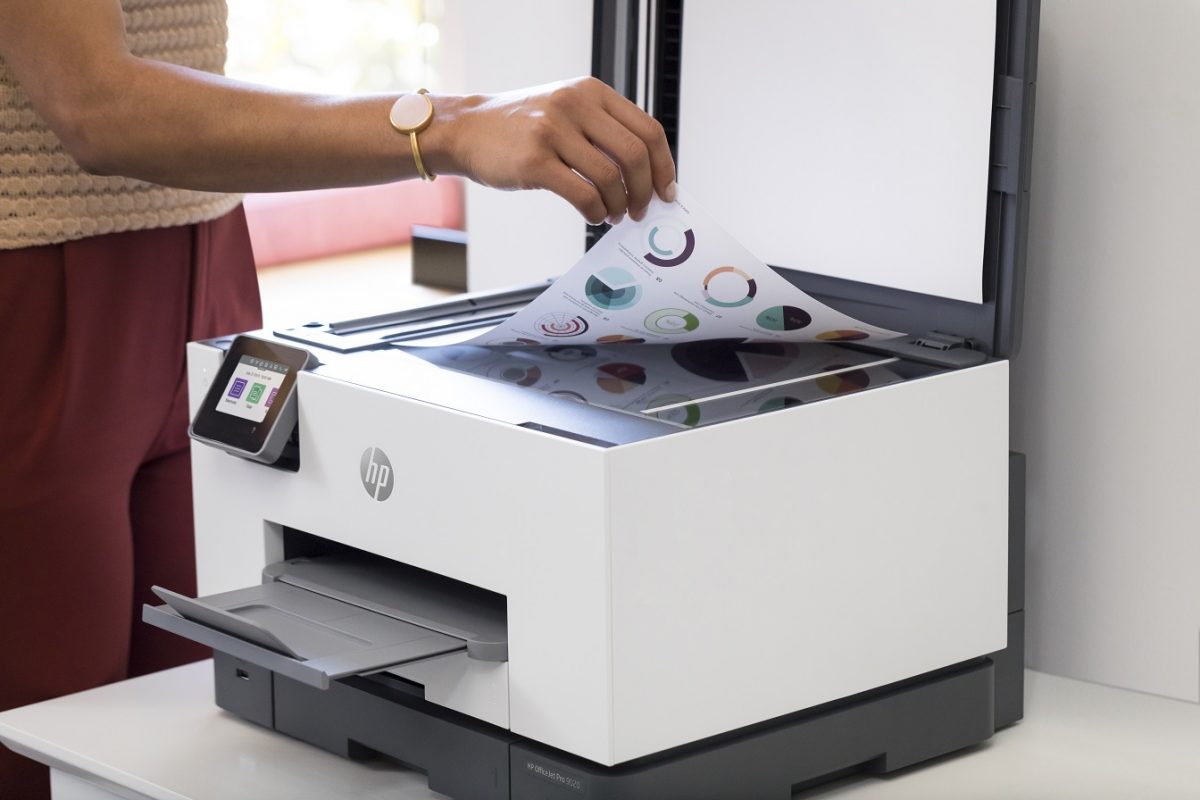
The use of today’s ink jet printers, computers, and copiers to make money that is just good enough to pass is becoming more common, despite the fact that their products are worthless. According to him, the best American counterfeiters used heavy offset presses to produce excellent 20s, 50s, and 100s in the past.
People who use low-cost tools are the majority of the people who manufacture counterfeit U.S. bills. In the last fiscal year, approximately 60% of all fake money was printed on inkjet or laser printers. With the rate of counterfeiting rising from less than 1% in 1995 to more than 5% today, this number is increasing. A laser printer and software were used to create fake $100 bills, which were then sold. According to her attorney, she needed more money to care for her six children alone. Some printers have software that can detect when money is being copied, and it can block the action.
Can A Regular Printer Print Money?
You can’t use a photocopy machine to take photos of money. If you attempt to use modern printing or scanning technology to print currency notes, they will refuse to assist you in doing so. It is possible that some websites were shut down completely.
What Type Of Printing Is Used For Money?
The use of intaglio printing, a highly specialized and time-consuming process, is a valuable tool in the field of negotiable documents such as currency and passport sections. Many denominations use intaglio for portraits, vignettes, scrollwork, numerals, and lettering, which are not the same as those in other denominations.
How Does A Money Printer Work?
The Federal Reserve decides how much money should be printed in response to physical money demand, and then instructs the Treasury to print the amount. Following the transfer of this newly-minted money, it is distributed by the Fed to the 28 cash offices across the country.
What Kind Of Paper Do You Use To Make Counterfeit Money?
There is no definitive answer to this question as there are many types of paper that can be used to make counterfeit money. However, some of the more commonly used types of paper include printer paper, copy paper, and photo paper.
Over the centuries, counterfeiting has taken a number of forms. Obtaining proper paper, printing watermarks (often left out), reproducing security marks, and actually imprinting (most commonly through offset techniques) are all steps in the counterfeiting process. Nowadays, it is possible to counterfeit paper in a variety of ways, including obtaining appropriate paper, rendering watermarks (often left out), producing security markings, and actually imprinting the paper. Counterfeiting is not only a criminal act, but it also has a negative impact on our economy and society as a whole.
Can Printers Print Out Money?
Can printers print out money??
Yes, some types of printers can print out money. This is typically done with a special type of printer that is designed for printing money. These printers are usually found in banks or other financial institutions.
Many objects, such as toys and machine parts, can be 3D printed using 3D printers. It is impossible for a 3D printer to copy a surface texture that is unique to Money. Furthermore, a unique design is used to prevent counterfeiting on currency. It is not only illegal to use a 3D printer to print currency, but it is also dangerous. There are no materials available that can produce a replica of the look and feel of printed money. A 3D printer would be unlikely to be able to produce all new security features, such as micro-images or metal components, that currency providers would require. Paper bills are commonly made of cotton and are issued by the majority of the world’s countries.
Printing money with 3D printers would be difficult if not impossible in the near future. Counterfeits cannot be replicated in the same way that subtle colors used on banknotes can be, and tactile features can assist in detecting counterfeits. Play money can be used to make play money for children, collect money, or create board games if you want to print them.
Adobe Photoshop is an image editing program that is widely used. In some cases, it can be used to create counterfeit bills and images, which are illegal. Photoshop will reject images containing the EURion Constellation pattern, which can appear in several international currencies.
The Dangers Of Counterfeiting
Counterfeiting is a serious crime in the world of currencies. Regardless of how much money you want to fool someone, it is illegal to copy and pass off as genuine money. Even the most advanced of high-tech devices cannot help you if you want to fake money. If caught, you will almost certainly be charged with a felony.
Counterfeit Money Printer Software
There are many software programs that allow users to print counterfeit money. These programs are often available for purchase online, and can be used to print fake money that can be used in a variety of ways. While some people may use these programs to print fake money for personal use, others may use them to produce counterfeit money for criminal purposes. Either way, these programs can be very dangerous, and should be used with caution.
Laser Printer Counterfeit Money
Last year, inkjet and laser printers were used to create approximately 60 percent of all bogus $88.7 million recovered. In 2017, the United States government recovered more than $88 million in counterfeit currency, with nearly half of it made on regular old inkjet or laser printers.
The Electronic Frontier Foundation discovered an anticounterfeiting code in a Xerox color laser printer. How are code words written and what are the data contained within them? Vendors are unwilling to provide specifics on this subject. The documents were examined using date and time stamps, and they could be traced back to the printer. The yellow dots on color laser printers used by the United States and foreign governments are intended to hide the existence of tracking technology. The efforts of Brahm Neufeld are detailed in the book Brahm’s Yellow Dots, which focuses on his communication with his printer’s vendor. Lexmark eventually offered to refund the printer to him in response to what had occurred.
Can You Print Fake Money On A Printer?
It’s much easier now to forge a counterfeit bill than it was a generation ago. Every year, thousands of teenagers discover that if you are willing to break the law, you can print fake money with a computer, scanner, and printer in about 10 minutes. That doesn’t mean it will pass muster, but it’s still a work in progress.
The Dangers Of Printing Your Own Money
It may appear to be a novelty and excitement to some, but printing your own money is ultimately not a viable or sustainable option. It is possible to get carried away and end up with a lot more money than you expected, which can result in a variety of issues. When you try to use all of your money at once, you run the risk of receiving a very unpleasant surprise.
How Do Printers Recognize Money?
In the printing of currency, magnetic ink is used. Each denomination’s magnetic signature differs depending on its face and thus the denomination. Similar to bar code readers, machines use a magnetic signature to identify denominations.
The Dangers Of Fake $20 Bills
Fake $20 bills are frequently used to fund crime. They not only present a nuisance, but they also pose a security threat. Anyone who discovers a counterfeit $20 should contact their local law enforcement agency. It is critical to understand that these bills can have a negative impact on the financial system as well as individuals who use them.
How To Print Counterfeit Money On Inkjet Printer
To print counterfeit money on an inkjet printer, you will need a high-quality printer, special paper, and a software program that can create the images of the bills. The software program should have a setting for the type of paper you are using. The special paper is necessary to prevent the ink from smudging. Once you have the printer, paper, and software, you will need to create the images of the bills. This can be done by scanning real bills or by downloading images from the internet. Once you have the images, you will need to resize them to fit on the paper. Once you have the images the correct size, you can print them out on the paper.